Nothing ruins a vaping session faster than inhaling dry, charred cotton. If you just filled a brand-new pod and instantly choked on acrid smoke, you have experienced a dry hit. Understanding the burnt coil taste causes and fix is mandatory for every vaper who wants to stop wasting money on replacement hardware.
At KandyVape, we operate on a strict No-Return / No-Refund Policy. This means you must know exactly how to operate your device, match your e-liquid viscosity to your coil resistance, and understand thermal limits before you complete your purchase. This guide serves as your definitive technical manual for hardware preservation.
A burnt coil taste happens when the organic cotton wick inside the atomizer vaporizes without enough e-liquid saturation, causing the dry cotton to combust. The primary burnt coil taste causes and fix strategies involve manually priming the coil for 15 minutes before use, matching the e-liquid VG/PG ratio to the exact coil resistance, and respecting the maximum wattage output printed on the hardware. Never exceed the recommended wattage or chain vape faster than capillary action can re-saturate the cotton.
Primary Burnt Coil Taste Causes and Fix Strategies
The anatomy of a vape coil is simple. It consists of a metal heating element (usually mesh or wire) surrounded by organic cotton. When you press the fire button, the battery sends voltage to the metal, heating it to vaporize the liquid suspended in the cotton.
If the cotton is dry, the metal simply burns the organic material. Once cotton chars, the chemical structure permanently changes. There is no way to wash or repair a burnt wick; the pod or coil must go straight into the trash.
Failure to Prime the Cotton Correctly
The number one reason vapers in Dhaka burn their hardware within ten minutes of purchasing is a complete lack of priming. Priming is the process of manually forcing e-liquid into the dry cotton before applying any heat. Capillary action takes time, especially with thicker liquids.
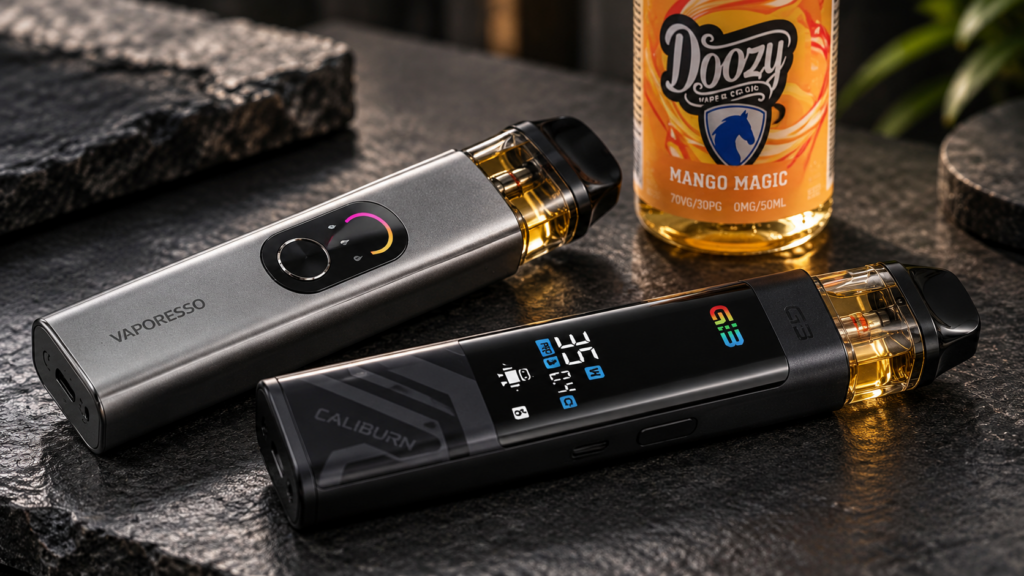
When you buy a replacement Uwell Caliburn G3 pod or a Vaporesso XROS series pod, filling it is only step one. You must let the pod sit completely unattached from the battery for a minimum of 10 to 15 minutes. Taking dry pulls (inhaling through the mouthpiece without pressing the fire button) creates a vacuum that pulls liquid directly into the wicking ports.
Chain Vaping and Capillary Action Failure
Your coil requires a specific amount of time to absorb liquid after every single puff. Chain vaping—taking multiple long drags back-to-back without a pause—depletes the liquid in the cotton faster than the wicking ports can replace it. This creates a dry spot right against the mesh heating element.
If you are using a 2ml pod system with a 1.0Ω resistance, the wicking holes are physically small. You must wait at least 15 to 30 seconds between puffs. If you demand continuous, rapid-fire usage, you need a high-capacity sub-ohm tank designed with massive wicking channels.
The Role of VG/PG Ratios in Coil Lifespan
E-liquid is not a universal substance. It is composed of Vegetable Glycerin (VG), Propylene Glycol (PG), flavorings, and nicotine. The ratio of VG to PG directly dictates the viscosity (thickness) of the liquid. Putting the wrong viscosity liquid into a device is a guaranteed way to destroy the cotton.
For advanced users looking into the chemical properties of Propylene Glycol as an organic solvent, it is clear that PG carries flavor well and runs extremely thin. VG, on the other hand, is a thick, syrupy substance responsible for dense vapor production.
High VG E-Liquids in Low-Wattage Pod Systems
If you put a 70/30 VG/PG liquid (commonly found in freebase e-liquids like Doozy Vape Co. 100ml shortfills) into a high-resistance, low-wattage MTL (Mouth-to-Lung) pod like a 1.2Ω Vaporesso XROS pod, the liquid is too thick to pass through the tiny cotton wicking ports. The coil will fire, the cotton will dry out instantly, and the thick liquid will refuse to re-saturate it in time.
For any coil with a resistance between 0.8Ω and 1.2Ω, you must strictly use a 50/50 VG/PG ratio. This perfectly balances viscosity, allowing the liquid to flow quickly into the small wicking holes. Mastering this matrix is a primary burnt coil taste causes and fix element that prevents user-error hardware failure.
Sweeteners and Coil Gunk
Beyond viscosity, the chemical makeup of your flavoring dictates coil lifespan. Dessert flavors, heavy fruits, and “ice” liquids contain high volumes of artificial sweeteners like sucralose. Under high heat, sucralose does not vaporize cleanly; it caramelizes.
This caramelized sugar builds up a thick, black crust directly on the mesh wire—a process known as “coil gunk.” Once the wire is crusted in burnt sugar, it can no longer heat the liquid efficiently. Instead, it just heats the black crust, producing an awful, bitter taste. If you prefer heavily sweetened liquids, you must accept that your coils will degrade much faster than someone vaping a clear, unsweetened mint flavor.
Device-Specific Settings: Wattage vs. Resistance (Ohms)
For devices with adjustable screens, such as the Vaporesso Armour Max or the Uwell Crown X, the user controls the exact power output. Every coil manufactured has a strict thermodynamic limit printed directly on the metal casing. Ignoring this limit guarantees instant hardware failure.
Always check the side of your replacement coil before installation. If a 0.4Ω mesh coil says “25W – 35W,” you must stay within that parameter. To understand exact device limitations, we highly advise reading up on the manufacturer wattage specifications directly from Vaporesso’s engineering data.
Overpowering Low-Resistance Coils (0.4Ω – 0.6Ω)
Low resistance coils are built for Direct-to-Lung (DTL) or Restricted Direct-to-Lung (RDL) vaping. They require higher wattage to operate (usually between 20W and 40W depending on the exact ohm rating) and have larger wicking holes to handle thicker 70/30 VG/PG liquids.
However, if you set your mod to 60W for a coil rated for a maximum of 35W, the metal mesh heats up far faster than the 70/30 liquid can vaporize. The intense heat flashes off the available e-liquid in a fraction of a second and immediately ignites the dry cotton. Always start your wattage at the lowest recommended setting and slowly work your way up to find the optimal temperature.
Underpowering High-Resistance Coils (0.8Ω – 1.2Ω)
Interestingly, underpowering your coil can also ruin it. If you have a 0.8Ω coil rated for 16W, and you set your device to 8W, the metal does not get hot enough to vaporize the 50/50 e-liquid properly. Instead of turning into vapor, the liquid simply boils.
This boiling causes the liquid to pool inside the center chimney. Eventually, this liquid leaks out of the bottom airflow vents or spits hot liquid directly into your mouth. While this doesn’t strictly burn the cotton, it floods the coil chamber, effectively ruining the pod and wasting your premium e-liquid.
Physical KandyVape Diagnostics: Inspecting Your Hardware
Sometimes the burnt coil taste causes and fix requires a physical inspection of the hardware itself. E-liquid is conductive, and if a previous pod leaked onto your battery’s contact pins, it can cause the internal chipset to misread the coil’s resistance.
Take a clean microfiber cloth and isopropyl alcohol. Wipe down the gold-plated 510 connector pins inside the battery housing of your device. If the device reads a 1.0Ω coil as a 0.4Ω coil due to a dirty connection, it will automatically send far too much power to the pod, resulting in an instant dry hit.
Identifying Counterfeit Coils (The Grey Market Problem in Bangladesh)
The Dhaka market is currently flooded with counterfeit vape hardware. Fake coils use low-grade wire that heats unevenly and cheap, non-absorbent cotton that cannot wick e-liquid properly. A counterfeit coil will often taste burnt within 24 hours of installation, regardless of how well you prime it or match your VG/PG ratios.
Because we are the official Bangladesh distributor for our brands, every single unit on our shelves is guaranteed authentic. If you are experiencing continuous burnt tastes with pods bought from unauthorized roadside shops, you are likely using cloned hardware. We strictly follow official product verification protocols established by Uwell and Vaporesso to ensure every batch imported to KandyVape passes global authentication checks.
How KandyVape’s Policies Protect Your Hardware Investment
We take vaping hardware seriously. To maintain the highest standard of inventory integrity in Bangladesh, KandyVape enforces a strict No-Refund / No-Return policy on all items. Once a pod, mod, or bottle of e-liquid leaves our shop, it cannot be returned.
This policy ensures that you are never sold an “open box” or tampered product. It also means the responsibility of device operation falls entirely on you. You must execute the burnt coil taste causes and fix protocols perfectly. If you burn a brand-new Vaporesso pod because you did not wait 15 minutes to let the cotton prime, that is a user error, and the pod will not be replaced.
Daily Dispatch and Premium Supply
When you need authentic replacement pods, coils, or premium e-liquids like Perfect Vape, KandyVape delivers with unmatched speed. We dispatch orders daily at 3:00 PM, and we maintain this schedule even on weekends. If your order is placed before the cutoff, it leaves our facility the exact same day.
To further protect your wallet, we offer free shipping for orders of 3,500 BDT or more. Whether you are stocking up on 0.6Ω replacement pods for your XROS 4 or buying premium 50/50 nic salts, bundling your hardware to meet the 3,500 BDT threshold is the most cost-effective way to vape in Bangladesh.
FAQ
How long should I let a new coil sit before vaping?
You must let a brand-new pod or coil sit completely saturated in e-liquid for an absolute minimum of 10 to 15 minutes before pressing the fire button. Taking a few dry pulls (inhaling without firing) helps force the liquid into the cotton faster.
Can you wash a burnt coil to fix it?
No. Once the organic cotton inside the metal housing is charred, its chemical structure is permanently altered. Water or alcohol cannot un-burn organic material. The pod or coil is destroyed and must be completely replaced.
Why does my coil taste burnt after only one day?
This is typically caused by one of three user errors: using an e-liquid heavily loaded with artificial sweeteners (sucralose) which gunks the wire, chain vaping faster than the capillary action can re-saturate the cotton, or using a thick 70/30 VG/PG liquid in a high-resistance (1.0Ω+) MTL pod.
Does KandyVape replace coils that taste burnt right out of the box?
Under our No-Refund / No-Return Policy, we do not replace burnt coils. Because we only stock 100% authentic hardware directly from the manufacturer, a coil burning out on day one is exclusively a result of user error (improper priming, wrong wattage settings, or incorrect liquid viscosity).
What is the best VG/PG ratio for avoiding a burnt taste in pod systems?
For standard MTL pod systems utilizing coils between 0.8Ω and 1.2Ω (like the Caliburn series or XROS series), you must use a 50/50 VG/PG ratio. This viscosity is thin enough to wick rapidly through the small juice ports, preventing dry hits.
How do I clean the battery connections to prevent power misfires?
Remove the pod and use a dry cotton swab or a microfiber cloth lightly damped with a tiny drop of isopropyl alcohol to wipe the gold-plated contact pins inside the battery. Ensure it is completely dry before reinserting the pod. Dirty connections cause resistance misreads, which lead to incorrect wattage output.