Understanding the exact physical mechanics of your hardware is the first step in responsible vaping. The Bangladesh market is currently flooded with counterfeit devices and conflicting information. As the official Bangladesh distributor for premium international brands like Vaporesso, Uwell, Doozy, and Perfect Vape, KandyVape operates on strict transparency. We do not sell grey-market hardware, and we do not rely on marketing fluff.
Because we strictly enforce a No-Return / No-Refund Policy on all opened hardware, this article serves as your definitive user manual. You need to understand the structural differences of a draw activated vs button vape before you finalize your cart. Whether you are adding a basic starter kit or building a comprehensive 3,500 BDT free shipping bundle, reading this matrix will ensure you make a flawless purchase decision the first time. We dispatch orders daily at 3:00 PM, meaning you have time right now to verify your specifications before today’s cut-off.
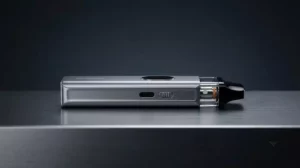
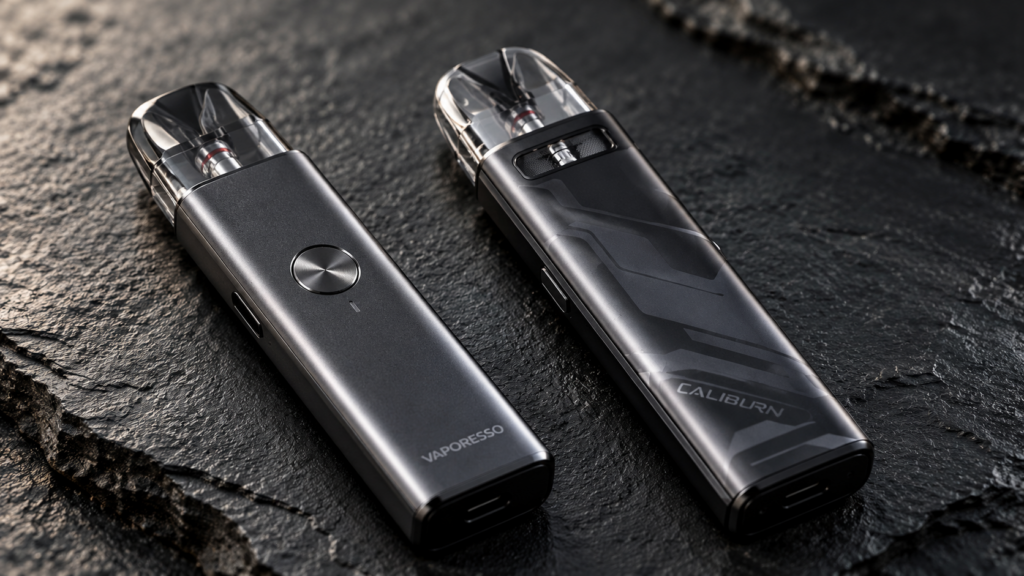
When comparing a draw activated vs button vape, the choice depends on user firing preference and coil resistance. Draw-activated vapes rely on internal airflow sensors that detect negative pressure to fire the coil automatically, mimicking a traditional cigarette. Button-activated vapes require a physical manual press to complete the electrical circuit, offering preemptive coil heating and strict control over vapor production. Most modern premium systems, like the Vaporesso XROS 4 and Uwell Caliburn G3, feature hybrid dual-activation to provide both methods simultaneously.
The Physical Mechanics of Firing Systems
Every electronic nicotine delivery system (ENDS) requires a method to close an internal electrical circuit, sending power from the battery directly to the coil. The method used defines the device category.
How Draw-Activated Sensors Work
In a strictly draw-activated system, a small component known as an airflow sensor (often a highly sensitive microphone or a vacuum pressure switch) sits between the pod and the battery base. When you inhale through the mouthpiece, you create a vacuum of negative pressure inside the chassis. The sensor detects this shift in air pressure immediately.
Once the threshold is crossed, the microchip signals the battery to release its specified wattage. This entire sequence happens in fractions of a second. If you stop inhaling, the pressure equalizes, the sensor resets, and the battery cuts off the power to the coil.
How Manual Button Switches Work
A button-activated system is purely mechanical on the user’s end. A physical switch sits on the exterior of the aluminum alloy or zinc body. Pressing this tactile button physically bridges the electrical connection on the internal circuit board.
The microchip reads the closed circuit and instantly pushes power to the atomizer. The battery will continue supplying power as long as the button remains depressed, up until the device’s hard-coded safety cutoff initiates (typically at the 8-second or 10-second mark to prevent overheating).
Analyzing the Draw-Activated Configuration
When evaluating a draw activated vs button vape, many first-time buyers lean heavily toward the automatic sensor. It offers direct simplicity.
Advantages of Auto-Draw Hardware
The primary advantage is structural familiarity. Adult smokers transitioning to vaping prefer this format because it accurately replicates the physical act of smoking a combustible cigarette. You pick up the device, inhale, and exhale. There are no locking sequences to memorize or buttons to locate in the dark.
Auto-draw devices also remove the risk of accidental pocket firing. Because the circuit only completes when negative pressure is applied through the mouthpiece, you can safely carry the device in your pocket or bag without worrying about a physical button depressing against your keys.
Disadvantages and Maintenance Realities
Draw sensors are highly sensitive electronic components. They require a clean environment to function perfectly. If you incorrectly match your e-liquid viscosity to your coil resistance, you risk liquid leaking through the base of the pod directly onto the sensor. A flooded sensor will either auto-fire independently or fail to read your draw entirely.
To maintain an auto-draw device, you must routinely clean the contact pins and the sensor cavity with a dry cotton swab. We see many users in our Mohammadpur shop assuming their device is broken, when in reality, a simple wipe of the internal vacuum sensor restores full functionality.
Analyzing the Button-Activated Configuration
Choosing a button-activated system gives the user complete authority over the battery output.
Advantages of Manual Firing
The most significant technical advantage of a button is the ability to pre-fire the coil. By pressing the button for half a second before you begin inhaling, you allow the internal mesh wire to reach optimal vaporization temperature. This eliminates the ramp-up time and ensures that your first inhalation is immediately dense and saturated with flavor.
Buttons also bypass sensor failure. If a pod leaks and floods the internal chassis, a button-activated circuit will still fire because the physical switch remains independent of the vacuum chamber. For adult users who work in dusty environments or heavy humidity, physical buttons guarantee reliability.
Disadvantages and Pocket Safety
The main drawback is user error. Forgetting to turn off or lock a button-activated device before putting it in your pocket will inevitably lead to an accidental continuous fire. This instantly destroys the cotton inside the coil, leading to a permanent burnt taste that requires an immediate pod replacement. Most modern devices combat this by requiring five rapid clicks to power down the chipset entirely.
The Modern Solution: Hybrid Dual-Fire Devices
In 2026, the debate surrounding a draw activated vs button vape has largely been solved by manufacturers implementing hybrid chipsets. These devices house both a vacuum pressure sensor and a physical tactile button. You can use either method interchangeably.
As the official distributor, KandyVape stocks the highest-performing hybrid devices on the market. Let us break down the exact specifications of the two leading flagship models available on our shelves right now.
Technical Breakdown: Vaporesso XROS 4
The Vaporesso XROS 4 represents the current apex of pod system engineering. It utilizes a highly responsive dual-fire system housed in a rigid, seven-stage stretched aluminum alloy unibody.
- Battery Specification: 1000mAh integrated cell.
- Charging Protocol: Type-C, 2A rapid charging (0 to 100% in precisely 30 minutes).
- Pod Capacity & Filling: 3ml top-fill system (clamshell mouthpiece removal).
- Heating Technology: COREX 2.0.
- Output Control: AXON chip offering three exact power output modes (Strong, Stronger, Strongest) navigated via the physical firing button.
The XROS 4 includes a 0.4Ω mesh pod and an 0.8Ω mesh pod in the box. The physical button allows users to manually pulse the 0.4Ω pod for restricted direct-lung (RDL) hits, while the auto-draw sensor works perfectly for the tighter mouth-to-lung (MTL) 0.8Ω pod. To understand how Vaporesso engineers their proprietary mesh heating grids for optimal temperature matching, you can review the technical blueprints directly on the official Vaporesso engineering portal.
Technical Breakdown: Uwell Caliburn G3
The Uwell Caliburn G3 offers a different approach to the hybrid model by incorporating an OLED screen and dedicated firing lockout modes.
- Battery Specification: 900mAh integrated cell.
- Charging Protocol: Type-C, 2A fast charging.
- Pod Capacity & Filling: 2.5ml capacity with ultrasonic welding for air-tight anti-leak control.
- Heating Technology: Pro-FOCS Flavor Technology via FeCrAl Meshed coils.
- Maximum Output: 25 Watts.
What separates the Caliburn G3 in the draw activated vs button vape discussion is its firmware lockout feature. By rapidly clicking the firing button twice, you can cycle through three distinct operational modes: Auto-Draw Only (locking the button), Button Only (disabling the draw sensor), or Dual-Fire (both active). This exact level of granular control is why we highly recommend the G3. Customers who wish to dive deeper into Uwell’s specific Pro-FOCS flavor restoration matrices can find the raw component data on the Uwell corporate specifications page.
The KandyVape Matrix: Coil Resistance and E-Liquid Chemistry
Hardware is only half of the equation. Whether you use a draw activated vs button vape, applying the wrong e-liquid chemistry to your pod will result in immediate hardware failure.
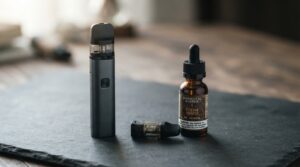
Because KandyVape enforces a strict No-Refund compliance manual, you must match your liquids correctly. E-liquids consist of Vegetable Glycerin (VG) and Propylene Glycol (PG). VG is thick and produces vapor clouds. PG is thin, carries flavor, and provides the throat hit. For a deep understanding of how these chemical compounds interact with heat at a molecular level, you can review the extensive safety and viscosity data profiles maintained by the PubChem chemical database. Furthermore, we ensure all our product specification listings align strictly with Schema.org product documentation standards so our technical data remains universally accurate.
Sub-Ohm Coils (0.4Ω to 0.6Ω)
These coils feature wide wicking ports and require higher wattage (18W to 30W) to fire correctly.
- Best Firing Method: Button-activation is highly recommended. The physical button allows you to pre-heat the thicker mesh.
- Liquid Compatibility: You must use 70VG/30PG Freebase nicotine liquids. If you use thin 50/50 nicotine salts in these coils, the liquid will bypass the cotton, flood the pod chamber, and permanently destroy your auto-draw sensor.
High-Resistance Coils (0.8Ω to 1.2Ω)
These coils feature narrow wicking ports and operate at lower wattages (10W to 16W).
- Best Firing Method: Draw-activation is flawless here. The tight airflow restriction easily triggers the internal vacuum sensor.
- Liquid Compatibility: You must use 50VG/50PG Nicotine Salts or 50/50 Freebase liquids. If you use thick 70VG liquids in a 1.2Ω pod, the cotton will not absorb the liquid fast enough, resulting in an immediate dry burn that destroys the pod.
Hardware Degradation and Long-Term Maintenance
Electronic devices degrade over time, but proper maintenance severely delays this reality.
If you are using a strictly draw-activated device, you must monitor condensation. Vapor naturally leaves trace amounts of moisture in the pod housing over time. If left unchecked, this moisture builds up and seeps into the sensor. Wipe the inside of your device with a dry tissue every time you refill your pod.
If you are using a strictly button-activated device, be aware of physical switch degradation. Continual heavy pressing can eventually wear out the tactile spring beneath the button. Always press the button firmly but gently.
Finally, battery care applies to both formats. The lithium-ion cells inside the XROS 4 (1000mAh) and Caliburn G3 (900mAh) prefer shallow charging cycles. Do not leave them plugged in overnight. Charge them to 100% and remove them from the cable immediately to preserve the maximum lifespan of the internal cell.
The KandyVape Checkout Protocol
You now possess the exact technical knowledge required to choose between a draw activated vs button vape. You understand how sensors operate, how physical circuits close, and exactly which coil resistances correspond to specific e-liquid viscosities.
This transparency is why KandyVape remains the ultimate local authority in Dhaka. We protect our customers from grey-market clones by supplying only official, authenticated hardware. Build your cart with confidence knowing exactly what you are purchasing. Remember, if your basket reaches 3,500 BDT, your shipping fee automatically zeroes out. Finalize your selections and complete your checkout before 3:00 PM today to guarantee immediate dispatch to your location. For adult vapers who prefer an in-person consultation, visit us directly at Shop #22, Level #3, Sahabuddin Plaza, Adabar, Mohammadpur 1207, Dhaka.
─────────────────────────────────────────
Frequently Asked Questions
Why does my draw-activated vape keep firing after I stop inhaling?
This is caused by a flooded or sticking auto-draw sensor. Excess e-liquid or condensation has pooled inside the sensor cavity, tricking the microchip into reading continuous negative pressure. Remove the pod immediately, dry the internal chassis completely with a cotton swab, and take a few sharp, short pulls from the pod while it is detached to clear any trapped liquid.
Is it safe to leave my button-activated vape in my pocket?
It is completely unsafe unless the device is actively locked. A physical button will depress if pressed against keys, phones, or tight fabric. This will cause the coil to fire continuously until the 8-second safety cutoff triggers, severely burning your cotton. Always click the fire button five times to turn the device off before pocketing it.
Can I use nicotine salts in my Vaporesso XROS 4?
Yes, provided you select the correct pod. The XROS 4 box contains a 0.4Ω pod and an 0.8Ω pod. You must use the 0.8Ω pod for 50/50 nicotine salts. If you attempt to run thin nicotine salts through the high-powered 0.4Ω pod, the device will leak, spit boiling liquid into your mouth, and fail entirely.
How do I switch the firing mode on the Uwell Caliburn G3?
The Caliburn G3 allows you to dictate the firing sequence. With the device powered on, rapidly click the physical fire button two times within a two-second window. The OLED screen will cycle between showing a button icon (manual only), an airflow icon (draw-activation only), or both icons (hybrid dual-fire mode).
Why doesn’t KandyVape accept returns on opened hardware?
As an official distributor, hygiene and product authenticity are non-negotiable. Once a factory seal is broken and a pod is filled with e-liquid, the device becomes a used, unsanitary item that cannot be legally or ethically resold. This is why we provide extensive, hyper-accurate manuals prior to purchase to ensure you select the exact specifications you need.
Do I get free delivery inside Dhaka if I order right now?
Yes, any order totaling 3,500 BDT or more automatically qualifies for free shipping. If you complete your transaction before our daily 3:00 PM dispatch deadline, your package will leave our Mohammadpur facility today, regardless of whether it is a weekday or weekend.