Having coil resistance explained clearly is the first step to mastering your vaping hardware. Many adult consumers in Dhaka purchase advanced kits without understanding how the internal heating element interacts with their chosen e-liquid. This lack of technical knowledge leads to burnt pods, leaking tanks, and wasted money.
At KandyVape, we function as the official Bangladesh distributor for premium international vape brands including Vaporesso, Uwell, Doozy, and Perfect Vape. We take hardware education seriously. Getting your coil resistance explained correctly prevents user error and ensures you get the exact nicotine delivery you expect.
This comprehensive manual delivers exactly what you need. We break down the physics, liquid compatibility, and specific product lines. With coil resistance explained by our technical staff, you can make flawless purchase decisions the very first time.
Coil resistance, measured in Ohms (Ω), dictates how much heat your vape generates and how quickly it vaporizes e-liquid. Low resistance (sub-ohm, under 1.0Ω) requires high wattage, producing massive vapor for Direct-To-Lung (DTL) vaping with high-VG freebase liquids. High resistance (above 1.0Ω) requires low wattage, producing tight, cooler vapor ideal for Mouth-To-Lung (MTL) vaping and nicotine salts.
The Core Concept: Coil Resistance Explained in Simple Terms
Understanding the mechanics of your device requires looking at the actual wire inside your pod or tank. The resistance of that wire controls everything from battery drain to flavor production. Having the baseline physics of coil resistance explained gives you total control over your device.
What is an Ohm (Ω)?
An Ohm is the standard unit of electrical resistance. In a vaping context, resistance measures how much the metal wire inside your atomizer restricts the electrical current flowing from the battery. When you have coil resistance explained purely through physics, it comes down to a simple barrier.
A lower Ohm number means there is less restriction. The electricity flows faster, creating intense heat rapidly. A higher Ohm number means more restriction, resulting in a slower, cooler heating process.
How Heat and Resistance Interact
When you press the firing button on your device, the battery sends voltage through the coil. The coil resists this current, and that friction generates heat. Getting the heat dynamics of coil resistance explained helps you avoid destroying your cotton wicks.
If you push 50 watts through a 1.2Ω coil, the high resistance cannot handle that much raw power, and the cotton will burn instantly. Conversely, pushing 10 watts through a 0.2Ω coil will not generate enough heat to vaporize the liquid. The coil will flood, and the liquid will leak through the airflow vents.
To ensure our digital guides meet web standards for accessibility, we structure our technical tables following W3C documentation practices so our users can easily read specifications across all mobile devices.
Sub-Ohm vs. Plus-Ohm: Coil Resistance Explained for Different Styles
Every adult vaper has a specific inhalation preference. The industry divides these preferences into two distinct categories based on mathematical resistance. Having the airflow and draw of coil resistance explained ensures you buy the correct replacement parts.
Sub-Ohm Vaping (< 1.0Ω)
Sub-ohm refers to any coil with a resistance lower than 1.0Ω. Common sub-ohm measurements include 0.15Ω, 0.2Ω, 0.4Ω, and 0.6Ω. Getting sub-ohm coil resistance explained is essential for users who want large vapor production and intense flavor.
Sub-ohm coils require high-discharge batteries and operate at high wattages, typically between 25W and 100W. This style of vaping is known as Direct-To-Lung (DTL). You inhale the thick vapor directly into your lungs, similar to taking a deep breath of air.
High-VG Liquids for Sub-Ohm
Because sub-ohm coils generate massive heat, they vaporize liquid extremely fast. Therefore, they require a thick, viscous e-liquid to prevent flooding. This is where Vegetable Glycerin (VG) comes into play.
Sub-ohm coils must be paired with high-VG e-liquids, usually mixed at 70% VG and 30% PG (Propylene Glycol). High-VG liquids are thick enough to cling to the large wicking ports of a 0.2Ω coil without leaking. Furthermore, sub-ohm setups vaporize so much liquid per puff that you must use low-concentration freebase nicotine (usually 3mg or 6mg) to avoid nicotine sickness.
Plus-Ohm / MTL Vaping (> 1.0Ω)
Plus-ohm vaping utilizes coils with a resistance of 1.0Ω or higher. Common measurements include 1.0Ω, 1.2Ω, and 1.4Ω. Having plus-ohm coil resistance explained is necessary for adults transitioning from traditional combustible cigarettes.
These coils operate at low wattages, typically between 9W and 18W. They provide a Mouth-To-Lung (MTL) draw. This means you draw the vapor into your mouth first, hold it for a fraction of a second, and then inhale it into your lungs. The vapor is cooler, less dense, and highly concentrated.
Nicotine Salts and High Resistance
Plus-ohm coils are explicitly designed for thin e-liquids and high nicotine concentrations. As we examine the chemical properties of base liquids, referencing the Propylene Glycol safety data sheet on PubChem shows exactly how this organic compound affects throat hit and thinning capabilities.
Nicotine salts (usually 20mg, 35mg, or 50mg) require 50/50 VG/PG ratios. The thinner 50% PG mixture flows easily into the tiny wicking holes of a 1.2Ω coil. If you attempt to put a thick 70/30 VG/PG liquid into a 1.2Ω pod, the liquid will not wick fast enough, resulting in a dry, burnt hit.
Coil Resistance Explained: Wire Materials and Surface Area
The physical composition of the wire inside your atomizer dictates its resistance and heating behavior. Having the metallurgy of coil resistance explained prevents you from using incorrect temperature control settings on your mod.
Standard Kanthal A1
Kanthal A1 is the most common wire material used in standard replacement coils. It is an iron-chromium-aluminum alloy that is highly durable and holds its shape well. Kanthal provides a stable resistance reading and is strictly for variable wattage mode.
Nichrome (Ni80) and Stainless Steel (SS316L)
Nichrome (Ni80) contains 80% nickel and 20% chromium. It heats up much faster than Kanthal, providing a rapid ramp-up time. Many advanced sub-ohm tanks use Ni80 mesh to deliver instant vapor production.
Stainless Steel (SS316L) is highly versatile. It can be used in both standard variable wattage mode and advanced Temperature Control (TC) mode. SS316L provides an extremely clean flavor profile and is frequently used in high-end rebuildable atomizers.
Mesh vs. Round Wire
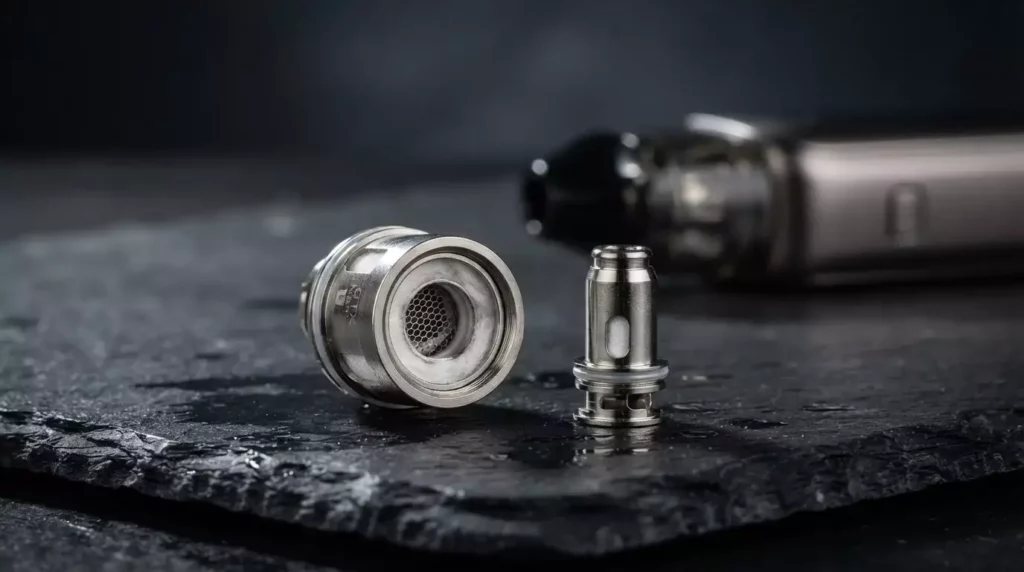
Modern vaping hardware heavily favors mesh coil designs. Instead of a single strand of wire coiled like a spring, mesh is a perforated metal sheet. Having mesh coil resistance explained requires looking at surface area.
Because a mesh sheet covers more of the organic cotton wick, it heats the liquid evenly and rapidly. A 0.2Ω mesh coil will produce significantly more flavor and vapor than a 0.2Ω round wire coil, even though the mathematical resistance is identical. The increased surface area maximizes vaporization efficiency.
Why Coil Resistance Explained Properly Saves You Money
At KandyVape, we enforce a strict No-Return / No-Refund Policy. We do this to guarantee that every customer receives 100% authentic, untouched, sanitary hardware. Because of this compliance standard, our educational guides serve as definitive user manuals.
Having coil resistance explained thoroughly protects your investment. If you buy a pack of 0.15Ω coils for your MTL pod system, they will not work. You will have wasted your money because the product cannot be returned once opened.
Matching E-Liquid to Coil Resistance
The most common error we see at our Mohammadpur store involves liquid mismatching. We want the financial impact of coil resistance explained clearly. If you put 50mg nicotine salt into a 0.2Ω coil, you will experience extreme discomfort and immediately burn out the coil.
Always follow this strict matrix. Use 0.15Ω to 0.6Ω coils strictly for 70/30 VG/PG freebase liquids (0mg to 6mg). Use 0.8Ω to 1.4Ω coils strictly for 50/50 VG/PG nicotine salts (20mg to 50mg). Adhering to this matrix ensures your coils last their full lifespan, typically 7 to 14 days.
Device Output and Battery Draw
Your device’s battery capacity, measured in milliampere-hours (mAh), dictates how long it will last between charges. Getting battery draw and coil resistance explained together shows you how to optimize battery life.
A 0.2Ω coil demands a massive amount of amperage from the battery. If you use a 0.2Ω coil on a small 1000mAh internal battery device, it will drain from 100% to zero in less than two hours. For all-day sub-ohm vaping, you require dual external 18650 batteries.
Coil Resistance Explained: Official Brand Specifications
As an official Bangladesh distributor, we carry the world’s most trusted brands. Counterfeit hardware is a massive issue in Dhaka, but our direct relationships guarantee authenticity. Let’s have brand-specific coil resistance explained using real-world examples currently on our shelves.
Vaporesso GTX and GTI Series
The Vaporesso GTX platform is an industry standard. When we stock official hardware, we cross-reference data directly with the Vaporesso hardware specification database to guarantee compatibility across their Target, Swag, and Luxe device lines.
- GTX 0.2Ω Mesh: Rated for 45W-60W. Best used with 70/30 freebase liquid. DTL draw.
- GTX 0.6Ω Mesh: Rated for 20W-30W. Best used with 50/50 freebase or low-strength nicotine salts. Restricted DTL draw.
- GTX 1.2Ω Regular: Rated for 8W-12W. Best used with high-strength nicotine salts. Tight MTL draw.
The Vaporesso GTI platform is designed exclusively for high-power sub-ohm vaping. Their 0.15Ω and 0.2Ω coils feature massive wicking ports specifically engineered for thick 70/30 and 80/20 VG/PG blends.
Uwell Caliburn Series
The Uwell Caliburn series dominates the pod system market. Our technical team frequently reviews the Uwell product engineering guidelines to understand precise wattage limits and airflow restrictions for their Caliburn G and A series coils.
- Caliburn G 0.8Ω Mesh: Operates at approximately 18W. Provides a warm, loose MTL draw. Excellent for 20mg nicotine salts or 50/50 freebase.
- Caliburn G 1.0Ω Standard: Operates at 15W. Provides a tighter MTL draw. The balanced choice for 35mg nicotine salts.
- Caliburn G 1.2Ω Mesh: Operates at 13W. Provides the tightest MTL draw. Engineered specifically for intense 50mg nicotine salts, delivering a cool, smooth throat hit.
Having the Caliburn coil resistance explained ensures you purchase the exact pod that matches your desired throat hit.
KandyVape Store Logistics and Authentic Hardware in Dhaka
Now that you have coil resistance explained in full technical detail, you are ready to make an informed purchase. KandyVape provides the most reliable logistics infrastructure for adult vapers in Bangladesh.
We only sell verified, authentic products. Every device and coil pack we sell features a scratch-off authentication code that you can verify directly on the manufacturer’s website. We refuse to participate in the grey-market clone trade.
3:00 PM Dispatch and 3,500 BDT Free Shipping
We operate with strict efficiency. We dispatch all nationwide orders daily at exactly 3:00 PM, including on weekends. If your order is confirmed before the 3:00 PM cutoff, it leaves our facility the same day.
Furthermore, we reward bulk purchases. We offer completely free shipping on all orders totaling 3,500 BDT or more. You can combine a new pod system, a pack of replacement coils, and two bottles of premium e-liquid to easily hit this threshold. Prices on our website and in-store are explicitly quoted in BDT, with zero hidden fees.
Mohammadpur Store Location
If you prefer to browse our hardware in person, or if you need coil resistance explained directly by one of our technicians, visit our physical storefront. Our retail location allows you to inspect the devices before finalizing your purchase under our No-Refund policy.
Our physical location: Shop #22, Level #3, Sahabuddin Plaza, Adabar, Mohammadpur 1207, Dhaka, Bangladesh. We are fully stocked with official Vaporesso, Uwell, Doozy, and Perfect Vape inventory.
FAQ
Even with coil resistance explained extensively, our customers in Dhaka frequently ask specific technical questions before checking out. Here are the definitive answers.
1. Why does my 1.2Ω coil taste burnt after only two days? This is almost always a liquid compatibility issue. If you are using a thick 70/30 VG/PG e-liquid, the 1.2Ω coil cannot absorb the liquid fast enough. You are burning dry cotton. Switch to a 50/50 VG/PG liquid immediately. Additionally, ensure you are not exceeding the maximum recommended wattage (usually 12W-15W for a 1.2Ω coil).
2. Can I use 50mg nicotine salt with a 0.2Ω sub-ohm coil? Absolutely not. A 0.2Ω coil vaporizes a massive amount of liquid per second. Inhaling 50mg nicotine salt through a sub-ohm coil will deliver a dangerous amount of nicotine to your system instantly, resulting in severe dizziness, nausea, and a harsh, painful throat hit. Only use 0mg, 3mg, or 6mg freebase liquid with 0.2Ω coils.
3. What is the best coil resistance for a heavy smoker trying to quit? Adults transitioning from combustible cigarettes require a tight draw and high nicotine concentration to satisfy cravings. We recommend a coil resistance between 1.0Ω and 1.2Ω. Pair this with a 35mg or 50mg nicotine salt e-liquid to replicate the throat hit and fast nicotine absorption of a traditional cigarette.
4. Why is my 0.4Ω pod leaking liquid from the bottom airflow? Leaking occurs when the coil is flooded. If you are drawing too hard on a 0.4Ω coil, or if your wattage is set too low (e.g., firing a 0.4Ω coil at 10W), the liquid pulls into the coil but does not vaporize. The unvaporized liquid then drains straight down through the airflow vents. Increase your wattage to the recommended specification (usually 25W-35W for 0.4Ω).
5. How do I know when it is time to change my coil? A coil needs replacing when the flavor becomes muted or tastes distinctly burnt. You may also notice a decrease in vapor production, or the e-liquid in your tank may start turning dark brown or black. On average, with proper wattage and liquid pairing, a standard coil lasts 7 to 14 days before the cotton degrades.
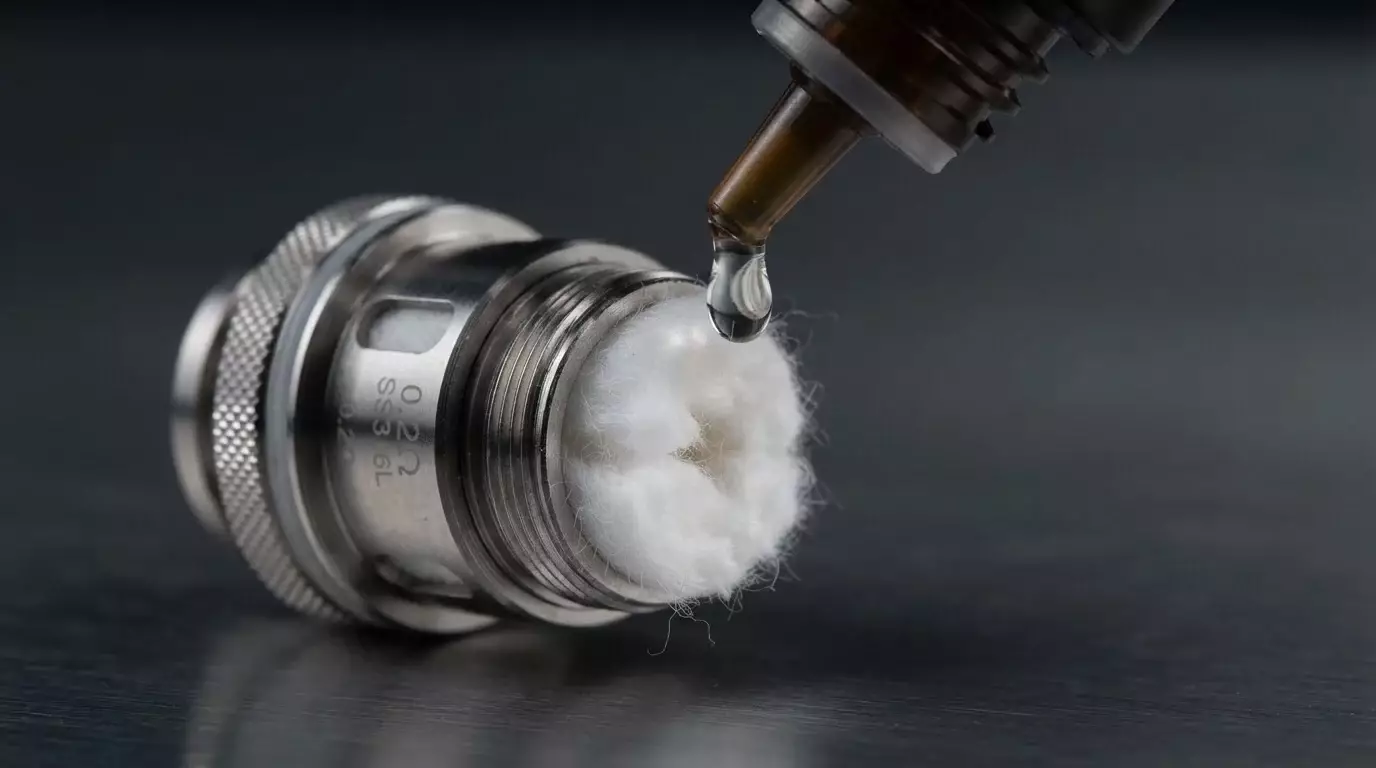
6. Do I need to prime my new coil before using it? Yes. Whenever you install a fresh coil, you must fill the pod or tank and let it sit untouched for a minimum of 10 to 15 minutes. This allows the dry organic cotton to fully saturate with e-liquid. Firing the device immediately after filling will burn the dry cotton, permanently ruining the coil and voiding it under our No-Refund policy.