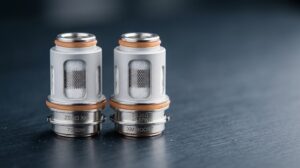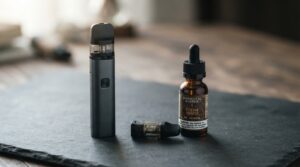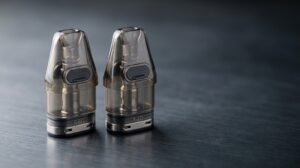
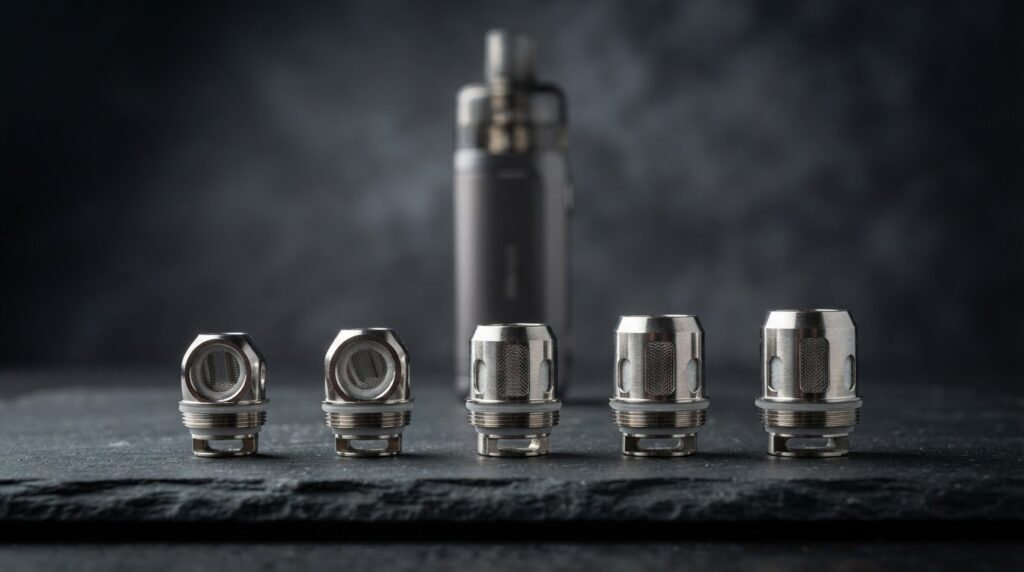
The GTX platform is Vaporesso’s most widely stocked coil series in Bangladesh. If you own a GTX ONE, a GTX GO 40, a LUXE PM40, or a TARGET PM80, your replacement coils all come from the same family — nine options, ranging from 0.15Ω to 1.2Ω, each built for a different draw style and nicotine strength. The problem is that “uses GTX coils” printed on a box tells you almost nothing. It does not tell you which of those nine coils your device actually supports, what wattage to run them at, which nicotine type pairs correctly, or how to tell a genuine coil from the clones that have appeared in the local grey market.
This guide covers all of that. It is a pre-purchase reference, not an advertisement. KandyVape operates a strict no-return policy, which means a wrong coil order costs you the full price and leaves you with hardware you cannot use. We would rather spend 2,000 words preventing that than process a complaint we cannot resolve.
The Vaporesso GTX coil platform spans nine resistance options: 0.15Ω, 0.2Ω, 0.3Ω, 0.4Ω, 0.6Ω, 0.8Ω, 1.2Ω Mesh, 1.2Ω Regular, and an RBA. GTX and GTi coils are not interchangeable — they are separate platforms with different physical designs. The GTX ONE supports GTX 0.6Ω, 0.8Ω, and 1.2Ω coils. The GTX GO 80 supports all GTX platform coils; the GTX GO 40 supports GTX 0.3Ω through 1.2Ω but not the 0.15Ω or 0.2Ω. The TARGET PM80 ships with GTX 0.2Ω and 0.3Ω and supports the full range above 0.15Ω. The LUXE PM40 ships with GTX 0.6Ω and 0.8Ω. Current BDT pricing is listed on the product page.
GTX vs GTi: Understand This Before You Order Anything
This is the most common and most expensive mistake a GTX device owner makes. Vaporesso runs two separate coil platforms: GTX and GTi. They are physically incompatible. A GTi coil will not seat correctly in a GTX device. The coils look similar in packaging photographs, and several international sellers list them interchangeably. They are not.
GTX coils are the platform for pod mods and compact kits: the GTX ONE, GTX GO series, LUXE PM40, TARGET PM80 and PM80 SE, SWAG PX80, and others. GTi coils belong to a different family of high-wattage tank devices — the ARMOUR ULTRA, GEN 200, and iTank T tank systems. If your device is on that second list, you are reading the wrong article. If it is on the first list, GTX coils are the only coils that will work.
The Vaporesso official coils page confirms this directly: “GTX and GTi use different physical designs and fit different devices.” This is not a minor compatibility note. It is the first thing to confirm before placing any order.
The Nine GTX Coils and What Each One Actually Does
Every GTX coil has a resistance value printed on its side. That number controls three things simultaneously: the draw style (how tight the airflow feels), the required wattage range, and the type of e-liquid and nicotine strength that pairs correctly with it. Getting one of these wrong degrades performance. Getting two wrong wastes the coil in under a day.
The table below uses specifications verified against Vaporesso’s official product pages. The “draw style” column uses the established vaping shorthand: MTL means mouth-to-lung, which resembles the draw of a cigarette; RDL means restricted direct lung, which is slightly more open; DTL means direct-to-lung, which is a full, unrestricted inhale used with high-VG e-liquid at higher power.
| Coil | Resistance | Wattage Range | Best W | Draw Style | E-Liquid VG/PG | Nicotine Pairing |
| GTX 0.15Ω Mesh | 0.15Ω | 60-75W | 70W | DTL | 30/70 – 40/60 | 0-6mg freebase |
| GTX 0.2Ω Mesh | 0.2Ω | 45-60W | 55W | DTL | 30/70 – 40/60 | 0-6mg freebase |
| GTX 0.3Ω Mesh | 0.3Ω | 32-45W | 40W | RDL | 30/70 – 40/60 | 0-6mg freebase |
| GTX 0.4Ω Mesh | 0.4Ω | 26-32W | 30W | RDL | 40/60 – 50/50 | 6-12mg salt or freebase |
| GTX 0.6Ω Mesh | 0.6Ω | 20-30W | 28W | MTL/RDL | 40/60 – 50/50 | 10-20mg salt |
| GTX 0.8Ω Mesh | 0.8Ω | 12-26W | 18W | MTL | 50/50 – 40/60 | 12-20mg salt |
| GTX 1.2Ω Mesh | 1.2Ω | 7-11W | 11W | MTL tight | 50/50 – 40/60 | 20-50mg salt |
| GTX 1.2Ω Regular | 1.2Ω | 8-12W | 11W | MTL tight | 50/50 – 40/60 | 20-50mg salt |
| GTX RBA | ~0.7Ω (DIY) | Varies | DIY | DIY | DIY | DIY |
Source: Vaporesso GTX coils official spec page
One note on the 0.6Ω: two official Vaporesso pages show a minor discrepancy, with the main product site showing 20-26W (best: 24W) and the store spec table showing 20-30W (best: 28W). We use the broader range. Check the printed value on your coil before setting your device.
The nicotine pairing column matters more than most buyers realise. Propylene glycol (PG) and vegetable glycerin (VG) behave differently at different temperatures. High-VG e-liquids, those with 70% VG or above, are thicker and require higher wattage and larger wicking ports to vaporise evenly, which is why they pair with the sub-ohm DTL coils (0.15Ω to 0.3Ω) that run 40W and above. Run a thick 70/30 VG/PG liquid through a 1.2Ω MTL coil at 10W and the cotton cannot wick fast enough — you get dry hits and coil failure within hours. The chemical properties of these carrier liquids, documented in the PubChem entry for propylene glycol and the PubChem entry for glycerol (vegetable glycerin), determine their viscosity and thermal behaviour. Thinner, higher-PG liquids flow into MTL coils easily at low wattage; thicker, higher-VG liquids need heat and wider channels to vaporise cleanly.
The nicotine strength issue is equally direct. A 50mg salt nicotine liquid through a 0.2Ω coil at 55W produces a throat hit that most adults find physically unpleasant. High-nicotine salts are designed for low-wattage MTL coils precisely because the nicotine absorption is efficient at low temperatures. Run them through high-wattage DTL hardware and you are not getting more from the liquid — you are getting an experience most people abandon within a week. We would rather explain that here than sell you a coil that does not match your liquid.
Which GTX Coils Fit Which Devices: The Compatibility Map
This is the section most buyers need. The list below is drawn from Vaporesso’s official product pages and applies to the devices most commonly stocked in Bangladesh. Where a device’s product page lists specific recommended coils, those are noted. Where the full GTX platform is supported, that is noted too.
GTX ONE (2000mAh, 5-40W, 3ml tank) The GTX ONE is an MTL device by design. Its official spec page lists GTX 0.8Ω and GTX 1.2Ω Mesh as the included coils. The 0.6Ω also fits physically and falls within the device’s 40W ceiling. Sub-ohm GTX coils — the 0.15Ω through 0.4Ω range — should not be used in the GTX ONE. The 0.15Ω needs 60-75W minimum and the device tops out at 40W. You will not get the coil into its operating range. The 0.3Ω and 0.4Ω can technically fire below their recommended wattage, but the performance will be poor and the coil will gunk faster.
GTX GO 40 (1500mAh, 40W max, 3.5ml pod) The GTX GO 40 ships with the GTX 0.6Ω. Per the official product listing, the device supports the GTX platform broadly, but the 40W output ceiling means the same logic applies here as with the GTX ONE: the 0.15Ω at 60-75W and the 0.2Ω at 45-60W exceed this device’s power range. The GTX 0.3Ω at 32-45W is at the upper edge of what the GO 40 can deliver. Stick to GTX 0.4Ω through 1.2Ω for safe and consistent results in the GTX GO 40.
GTX GO 80 (3000mAh, 80W max, 5ml pod) The GTX GO 80 supports the full GTX coil platform including the 0.15Ω and 0.2Ω. The device has enough wattage headroom for every coil in the range. It ships with the GTX 0.2Ω at 45-60W, which is a DTL sub-ohm setup. If you want to use the GTX GO 80 as an MTL device, install a GTX 0.8Ω or 1.2Ω and set wattage accordingly. The device is versatile in a way the GO 40 is not.
TARGET PM80 (2000mAh, 5-80W, 4ml pod) The TARGET PM80 ships with GTX 0.2Ω and 0.3Ω coils and supports the full GTX range. Its AXON chipset Smart VW mode will auto-detect an installed GTX coil and suggest an appropriate wattage. This is the device on which the 0.15Ω is officially listed as compatible (its 80W ceiling covers the coil’s 60-75W range). For adult smokers switching who want an MTL draw, the PM80 with a GTX 0.8Ω at 12-20W is a straightforward setup; for those who prefer a more open draw, the 0.3Ω or 0.4Ω at 32-45W provides RDL airflow.
LUXE PM40 (1800mAh, 5-40W, RDL pod 4ml / MTL pod 3.5ml) The LUXE PM40 ships with GTX 0.6Ω and GTX 0.8Ω and supports GTX 0.6Ω through 1.2Ω. The 40W ceiling places the same constraint as the GTX ONE: sub-ohm 0.15Ω through 0.3Ω coils are outside this device’s power range. The LUXE PM40 is designed for nicotine salt users and restricted draws, and the 0.6Ω to 1.2Ω range covers that use case completely.
Nicotine, E-Liquid, and the Coil You Choose
If you are switching from cigarettes, the coil you pick determines how closely the experience resembles what you are used to. A cigarette draw is tight and delivers nicotine quickly. That corresponds to a high-resistance GTX coil — 0.8Ω or 1.2Ω — running at low wattage (8W to 20W), paired with 20mg to 50mg salt nicotine in a 50/50 VG/PG liquid. The draw is restricted, the nicotine delivery is efficient, and the device is quiet. This is where most adult smokers who are trying their first device should start.
An adult who has been vaping for some time on a basic pod device and wants more vapour output typically moves to a 0.6Ω or 0.4Ω coil. The draw is more open, the wattage is higher (20W to 32W), and the nicotine strength should come down — 10mg to 20mg salt rather than 50mg. Trying to run 50mg salt through a 0.4Ω at 30W is a combination that produces a throat hit severe enough that most people abandon the device entirely.
The DTL coils — 0.15Ω through 0.3Ω — are for experienced vapers who want high vapour output and are using 0mg to 6mg freebase liquids. These coils need devices capable of 32W minimum, and ideally 40W to 75W. They are not entry-level hardware. If you are reading this as someone switching from cigarettes, these coils are not for you yet.
How to Prime a GTX Coil and Why It Matters
A coil that arrives burnt on the first puff was almost never defective. It was dry-fired. The cotton inside a GTX coil must be fully saturated with e-liquid before the coil is fired for the first time. Fire a dry coil once and the cotton burns permanently. The burnt taste will not leave regardless of how much liquid you add afterward.
The process, as documented by Vaporesso’s own coil priming guide: place two to three drops of e-liquid directly onto the visible cotton through the wicking ports on the side of the coil. Install the coil, fill the pod or tank completely, and wait five to ten minutes before the first puff. That waiting time is not optional — it is what allows e-liquid to wick fully through all of the cotton, including the interior sections you cannot see. After waiting, start at the low end of the coil’s recommended wattage range and take a few short puffs before increasing power gradually. Never start at maximum wattage on a new coil.
High-VG e-liquids need longer priming time because they are thicker and absorb more slowly. If you are using a liquid with 70% VG or above, extend the wait to fifteen minutes.
When to Replace a GTX Coil: Signs That Are Specific, Not Vague
Most coil guides tell you to replace when “flavour drops.” That is not specific enough to be useful. Here are the actual signs, in order of severity:
The first sign is muted or flat flavour — you are getting vapour but it tastes thin compared to when the coil was new. This means the cotton is beginning to accumulate residue from sweeteners in your e-liquid, or the mesh surface is partially spent. The coil still works but is past its best performance.
The second sign is a faint background bitterness on every puff. This is early coil degradation. The mesh is heating unevenly, which produces uneven vaporisation. Replace the coil before this gets worse.
The third sign is an obvious burnt or acrid taste. This is terminal. The cotton is carbonised. No amount of additional liquid will remove that taste, and continuing to fire the coil pushes burnt compounds into the vapour. Replace it immediately.
The fourth sign is reduced vapour output at a wattage that previously produced normal amounts. This usually means the wicking ports are partially blocked, often from sweetener caramelisation. If cleaning the ports does not resolve it, the coil is done.
How long this takes varies enormously depending on the user. The variables are wattage (higher wattage burns the cotton faster), e-liquid sweetener content (sweet and dessert liquids caramelise onto mesh rapidly), chain vaping frequency (continuous puffs without breaks prevent the cotton from re-wicking between draws), and VG/PG ratio (thicker liquids that do not wick fast enough cause localized dry spots that carbon over). It is not accurate to give a single lifespan figure. Heavy daily users running sweet e-liquid at high wattage may replace coils every few days. Light users running unflavoured or tobacco-profile liquids at mid-range wattage can stretch significantly longer. The coil itself will tell you when it needs to go — the signs above are reliable.
Verifying Authenticity: GTX Coil-Specific Steps
Clone GTX coils are a confirmed issue in South Asian markets. A Reddit user documented receiving fake GTX coils in which the insulation material inside the coil was visibly melting, with an immediate bad taste on the first puff. The risk is not just wasted money. Melting insulation in a heating element that contacts vapour you inhale is a material safety concern.
Vaporesso operates a multi-version authentication system detailed at vaporesso.com/is-your-product-authentic. The steps are as follows:
Before opening the package, locate the anti-counterfeiting label on the side of the coil box. This label exists in three versions. In all three, tilting the label under light should produce a visible optical effect — the Vaporesso “V” logo shifts dynamically with the viewing angle. A printed or photocopied label will not do this. If the label shows no optical shift, the product is almost certainly counterfeit.
The scratch-code under the label should be intact and unscratched on a new product. A pre-scratched label on a “new” package is a warning sign that the code was already checked, possibly multiple times, which can indicate a repackaged or returned product from another market.
Scratch the label, then enter the 12- or 14-digit code at the Vaporesso verification page, or scan the QR code with your smartphone. Genuine products return an “Approved Authentication” message. Confirm that the QR code redirects to the vaporesso.com domain — not an alternative or lookalike domain. Clone products often have QR codes that redirect to unrelated pages or produce no result.
Inspect the font and print quality on the packaging. Counterfeit boxes frequently have slightly incorrect fonts, thinner cardboard, and misaligned printing. The coil’s resistance value printed on the body should be crisp and even, not blurred or off-centre.
KandyVape stocks Vaporesso products as the official distributor for Bangladesh. The coils you receive should arrive with the scratch coat intact. If a coil you ordered arrives with the scratch label already removed, contact us before using the product.
What to Do If the Coil Does Not Work as Expected
KandyVape’s no-return and no-refund policy applies to all products. This is stated on our [no-return policy page] and it is the reason this article exists in its current level of detail. A wrong specification in a buying guide is not a writing problem; it is a customer who paid for something that does not work and has no recourse. If you have followed the priming steps, confirmed compatibility against this guide, and the coil is still producing a burnt taste from the first puff on a verified authentic product, the most likely explanation is insufficient priming time or initial firing at too high a wattage. Revisit those steps before drawing any other conclusion.
If you are uncertain about compatibility before placing an order, you can visit our physical shop at Shop #22, Level #3, Sahabuddin Plaza, Adabar, Mohammadpur 1207, Dhaka, and ask a staff member to confirm the coil code against your device. That is a faster and more reliable check than any online compatibility guide, including this one.
FAQ
Q1: Which GTX coil should I buy for the GTX ONE?
The GTX ONE’s official spec page lists the GTX 0.8Ω Mesh (12-26W, best at 18W) and GTX 1.2Ω Mesh (7-11W, best at 11W) as the included coils. The GTX 0.6Ω also fits within the 40W ceiling of the device. Sub-ohm GTX coils at 0.15Ω through 0.4Ω exceed the device’s power range and should not be used in the GTX ONE.
Q2: Are GTX and GTi Vaporesso coils the same thing?
No. GTX and GTi are two separate coil platforms with different physical designs. They do not fit each other’s devices. GTX coils fit the GTX ONE, GTX GO series, TARGET PM80, and LUXE PM40, among others. GTi coils fit the ARMOUR ULTRA, GEN 200, and iTank T tank system. Check which platform your device uses before ordering. Ordering the wrong platform is not a situation we can resolve after the sale.
Q3: What nicotine strength should I use with a GTX 0.8Ω coil?
Vaporesso rates the GTX 0.8Ω Mesh for 50/50 to 40/60 VG/PG liquid at 12-26W. At that wattage range, 12mg to 20mg nicotine salt works well. Running 50mg salt through this coil is possible but the throat hit at any wattage will be severe enough that most users find it uncomfortable. If you are new to vaping from cigarettes and want a milder but still effective throat sensation, 20mg to 30mg salt with the 0.8Ω coil at 15W to 18W is a reasonable starting point.
Q4: How does delivery work if I order GTX coils online?
KandyVape dispatches orders daily at 3:00 PM including weekends. Free shipping applies on orders totalling 3,500 BDT and above. Below that threshold, a delivery charge applies — the current rate is listed on our [shipping and delivery page]. Delivery time within Dhaka and beyond depends on your location; check the shipping page for current estimates.
Q5: My new GTX coil tastes burnt on the first puff. What went wrong?
The coil was almost certainly not primed, or was fired before the cotton was fully saturated. Place two to three drops of e-liquid directly on the wicking ports, fill the pod or tank completely, and wait five to ten minutes before the first puff. Start at the lowest end of the coil’s recommended wattage range. If you fired the coil dry even once, the cotton is permanently damaged and the coil needs to be replaced. There is no way to recover a burnt coil.
Q6: What is the sign that a GTX coil is a fake?
The most reliable signs are: the anti-counterfeiting label on the box produces no optical shift when tilted under light, the scratch code is already removed on a “new” product, the QR code redirects to a non-vaporesso.com domain, or the coil produces an acrid or chemical taste on the very first primed puff. Packaging quality may also show misaligned printing or incorrect font weight. Verify every coil through Vaporesso’s authentication page before extended use.
Q7: Can I return a coil if it does not fit my device or does not work as expected?
No. KandyVape’s no-return and no-refund policy applies to all products without exception. This is why we published this compatibility guide. Confirm your device model, confirm the coil code against the compatibility map in this article, and verify authenticity on arrival before using the product. If you are uncertain before ordering, visit our Mohammadpur shop and a staff member can confirm the right coil for your device in person.
If you have identified the right GTX coil for your device using this guide, the current product listing and price are on the KandyVape coils page.
Orders placed before 3:00 PM dispatch the same day. If you want to confirm coil compatibility in person before ordering, we are at Shop #22, Level #3, Sahabuddin Plaza, Adabar, Mohammadpur 1207, Dhaka. Bring your device or the box it came in — a five-minute check against the coil stock is faster and more reliable than any compatibility list, including this one.